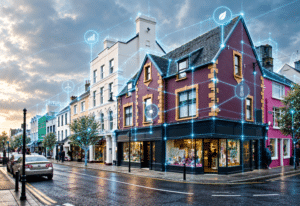

Fragmented building data is holding the real estate industry back
Buildings have more data than ever, yet answering relatively simple questions often remains surprisingly difficult. Information about a single building is spread across organisations, systems and datasets, making it challenging to create a complete and reliable picture. The next step for the real estate industry is therefore not collecting more data, but connecting the data that already exists.
Why fragmented building data slows decision-making in real estate
Despite the growing availability of building data, decision-making across the real estate sector often remains slow and complex. Information is generated from a wide range of sources, including technical building characteristics, EPCs, utility consumption, carbon emissions, geospatial mapping, climate risk assessments, transaction histories and retrofit investments. The volume of available data continues to grow, yet turning that information into actionable insights remains a challenge for many organisations.
Real estate is an ecosystem of various stakeholders. From contractors, consultants and financial institutions to governments and utilities. Each stakeholder relies on internal systems designed for their own workflows, and most datasets are created independently to serve specific operational or regulatory purposes. Accessing and integrating other stakeholders’ datasets is often costly, time-consuming and resource-intensive.
The problem is not the lack of information. The challenge is that data is rarely designed to move seamlessly between organisations, systems and use cases. In most organisations, data is scattered across departments, third parties and incompatible software systems or file formats. A single building can have technical specifications stored in facility management systems, energy consumption tracked in utility records, carbon emissions calculations managed in ESG tools and climate risks sitting in geospatial datasets. Teams spend enormous amounts of time collecting, validating and integrating data before they can even begin analysis and reporting. By the time the data becomes usable, it could already be outdated.
The hidden cost of disconnected building data
Fragmentation does more than slow processes; it prevents organisations from unlocking the full value of the data they already possess. Every disconnected dataset carries a hidden cost. Consultants spend valuable time locating and validating data instead of generating insights. Investors and bankers make decisions using incomplete information. Building owners miss opportunities to improve efficiency, reduce operating costs and enhance asset value. In many organisations, the same information is collected, validated and processed multiple times by different stakeholders. Valuable resources are spent managing data flows rather than generating insights. The cumulative impact is not only operational inefficiency, but also lost economic and environmental value across the entire real estate ecosystem.
Each dataset may be valuable on its own, but when disconnected, it provides only a partial view of building performance, risk and opportunity. The result is an industry suffering from data fragmentation at exactly the moment when integrated decision-making matters most.
Why interoperability is essential for connected building data
Buildings today are managed as dynamic systems that interact continuously with various infrastructure networks, energy and financial markets, environmental conditions and evolving regulations. Within this interconnected ecosystem, the role of data has fundamentally changed. Data is no longer just a tool for reporting and compliance; it has become a foundational layer of building operations, informing decisions, optimising performance and supporting resilience in a rapidly changing physical environment.
What the industry needs is not more information, but better data exchange between existing data sources. Data only creates value when it can be exchanged, combined and applied consistently across organisations. Without common standards, definitions and mechanisms for trusted data sharing, stakeholders will continue to operate with incomplete information.
Digital infrastructure for the built environment
This is why digital infrastructure is becoming increasingly important within the built environment. Just as physical infrastructure connects buildings to energy, water and transport networks, data infrastructure connects information across stakeholders, systems and use cases. This principle is at the heart of initiatives such as NXTBLDNG, which aim to improve interoperability and trusted data exchange across the built environment. The ability to exchange data efficiently is becoming a prerequisite for effective decision-making at scale.
How connected building data creates value
Recent industry research from BUILD UP, the European Commission’s community hub on energy efficiency and renewable energy in buildings, highlights that fragmented building data remains one of the key barriers to implementing building retrofits, impacting the achievement of policy objectives and scaling energy-efficiency improvements.
As organisations face growing regulatory, financial and climate-related pressures, the consequences of fragmentation are becoming increasingly visible. Disconnected datasets make it harder to assess risks, prioritise investments and improve asset performance. Reliable, interoperable building data is therefore becoming essential for informed decision-making, effective risk management and long-term value creation.
Better connected data can accelerate energy-efficiency improvements, support smarter investment decisions and help organisations respond more effectively to changing market and regulatory requirements. Building a more connected data ecosystem is a key step towards a more efficient and sustainable built environment.
The future of real estate depends on connected data
The future lies not in collecting more data, but in creating the conditions for data to move reliably between organisations, systems and stakeholders. Instead of manually putting together isolated reports and spreadsheets, stakeholders can work from a shared and trusted view of building performance, risk and opportunity.
Overcoming barriers to data interoperability
However, consolidating fragmented data remains a significant challenge, requiring organisations to overcome multiple barriers. Data fragmentation often results in inconsistent definitions, varying levels of quality and completeness and limited interoperability between systems. Questions surrounding data ownership, governance, privacy and security further complicate integration efforts. How can data quality and validity be verified across sources? Who owns the data and who can access it? Without clear answers to these questions, fragmentation will persist even as more data is collected. Addressing these challenges requires a clear framework of common standards, data collection and trusted mechanisms for data sharing.
From fragmented information to shared intelligence
The future of real estate will not be defined by the volume of data available, but by the industry’s ability to transform fragmented information into shared intelligence. Initiatives such as NXTBLDNG demonstrate how interoperability, trusted data exchange and connected datasets can help create the foundation for better decision-making across the built environment.
Organisations that invest in interoperability today will be better equipped to navigate regulatory change, manage climate risks and identify opportunities across their portfolios. The next step for the sector is not generating more data, but ensuring existing data can work together across organisations, systems and stakeholders..